
Full spoilers
For the spoiler-free version, see Project Hail Mary.
Project Hail Mary turns a coward’s accidental suicide mission into the most visually stunning and emotionally honest sci-fi film in years, falling just short of profound because the bromance it built steals the wheel from its own deeper themes.
Project Hail Mary is a movie about the end of the world that walked me out of the theater hopeful, which in this stretch of history feels close to impossible. It earns that hope the hard way, by handing the fate of humanity to a coward and making you watch him become someone worth the job, and that is why it lands as one of the best sci-fi films in years even with one real flaw.
Something is off from the first frame, in the best way
Grace wakes alone on a ship with no memory, pieces together that Earth’s sun is dying from a microbe called Astrophage, and realizes the cure is his problem to solve. On paper that is the most worn premise in the genre, and any other production settles into the formula right there. Lord and Miller refuse it. They shoot ordinary life, a lab bench, a classroom, sunlight on a hallway floor, with the reverence most films save for the last ten minutes, so you feel exactly what is at stake before the script ever argues for it. The color grading turns the flashbacks warm and dreamlike while the present runs cold and enormous, and Daniel Pemberton’s score hands the whole thing a sonic identity you carry out of the room. The non-linear structure is not a gimmick either. It runs the mission and the memories on two clocks, and every returned memory quietly rewrites the man you thought you were watching.
Rocky is the heart, and the best character of the year
Then Grace meets Rocky, and the movie changes gear. Rocky is an Eridian from a nearby star, five-legged and eyeless, no face, communicating in musical chords and breathing superheated ammonia, and by every rule of studio filmmaking he should be a gimmick that collapses on contact. Instead he becomes the most affecting character in any film this year. Their first meeting is staged like a horror scene, the sound design built to make your skin crawl, and the slow melt from terror to curiosity to cooperation to genuine love is the most rewarding arc the film has. James Ortiz voices a faceless puppet into something with more soul than most leads manage with a full face, and the effects stay tactile and believable instead of reaching for cute. The score warms alongside the friendship, moving out of dread into something distinct and human. It is the rare blockbuster bond that earns every single beat.
The humans hold their own
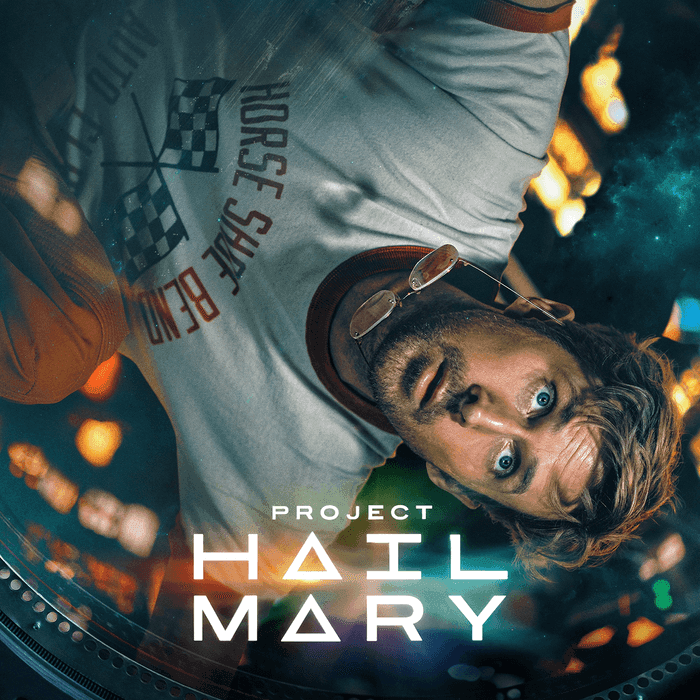
Ryan Gosling makes all of it feel real against a green screen, charismatic and fully committed, though he never quite stops being Gosling and Grace occasionally reads as a vehicle for that charm more than a person in his own right. Sandra Hüller is the quiet standout of the human cast as Eva Stratt, taking a character the novel wrote as pure cold steel and letting the fractures show underneath. Her arc reaches its peak on a needle-drop set to Harry Styles’ “Sign of the Times,” a swing that should be far too much and instead lands like a gut punch. The world is ending, and someone still has to find the nerve to try.
The hero who never wanted the job
Here is the reveal the whole film is built on. Grace was never a volunteer. He was a coward who begged to stay home, and Stratt had him drugged and physically loaded onto the ship against his will. His amnesia was not a side effect of the journey, it was his own mind hiding the shame from him. That reveal reframes every brave thing you watched him do, and it should be the knife straight to the chest.
The one thing keeping this from greatness is where that knife lands. By the time the cowardice truth arrives, the mission plot has already given you your catharsis, Rocky pulled back from the edge, the cure working, the crisis eased, so the biggest emotional bomb in the movie walks into a room that already exhaled. The order is backward. That is inherited almost directly from Weir’s novel, which had the space to stagger the beats out, and the film never fully solves it on screen.
The bromance is the ceiling as much as the peak
The friendship that makes the movie so lovable is also the thing that caps it. Once Grace and Rocky take over, the tone narrows into warmth and jokes when the material had earned the right to devastate. Characters stay endearing at the exact moments they were set up to break you. Grace’s final choice, turning the ship around to save his friend instead of going home to the world he saved, should shatter you. It lands cleanly, but it could have leveled you if the preceding hour had not sanded every sharp edge soft. The dialogue runs a touch too cheeky for a story about the extinction of all life, and you can feel the braver, colder version of this film hovering just underneath the one you got.
Why the hope still wins
None of that beats the ending, and this is where the movie makes its full case. Grace, older now, teaches a room of small Eridian children who raise their mechanical arms to answer him, at home in a life he never chose and can never leave. The film made hope feel earned rather than handed to you, the exhausting kind that costs everything and asks you to choose it while terrified out of your mind. Grace killed the coward he used to be, and for once the universe paid him back for it. The real subject here is that heroism is not the absence of fear, it is the decision to act while completely full of it, and in a run of years this bleak, that argument hits harder than any amount of spectacle could. See it on the biggest screen you can find.
Project Hail Mary: 87/100
Project Hail Mary is beautiful, brave and quietly hopeful when hope is hard to come by, a ghost of a braver film but still a really good movie.
Read the spoiler-free review →